Wireless Data Transmission
Choose cellular, satellite, or LoRaWAN based on your deployment. US cellular units can auto-switch between AT&T, Verizon, and T-Mobile, with international coverage in 150+ countries.
Radar-based. Wireless. Self-contained.
Monitor floods, rivers, streams, lakes, sewer lines, and lift pump stations with a low-cost sensor designed for real-world field conditions. Get dependable measurements without complicated installation or routine maintenance.
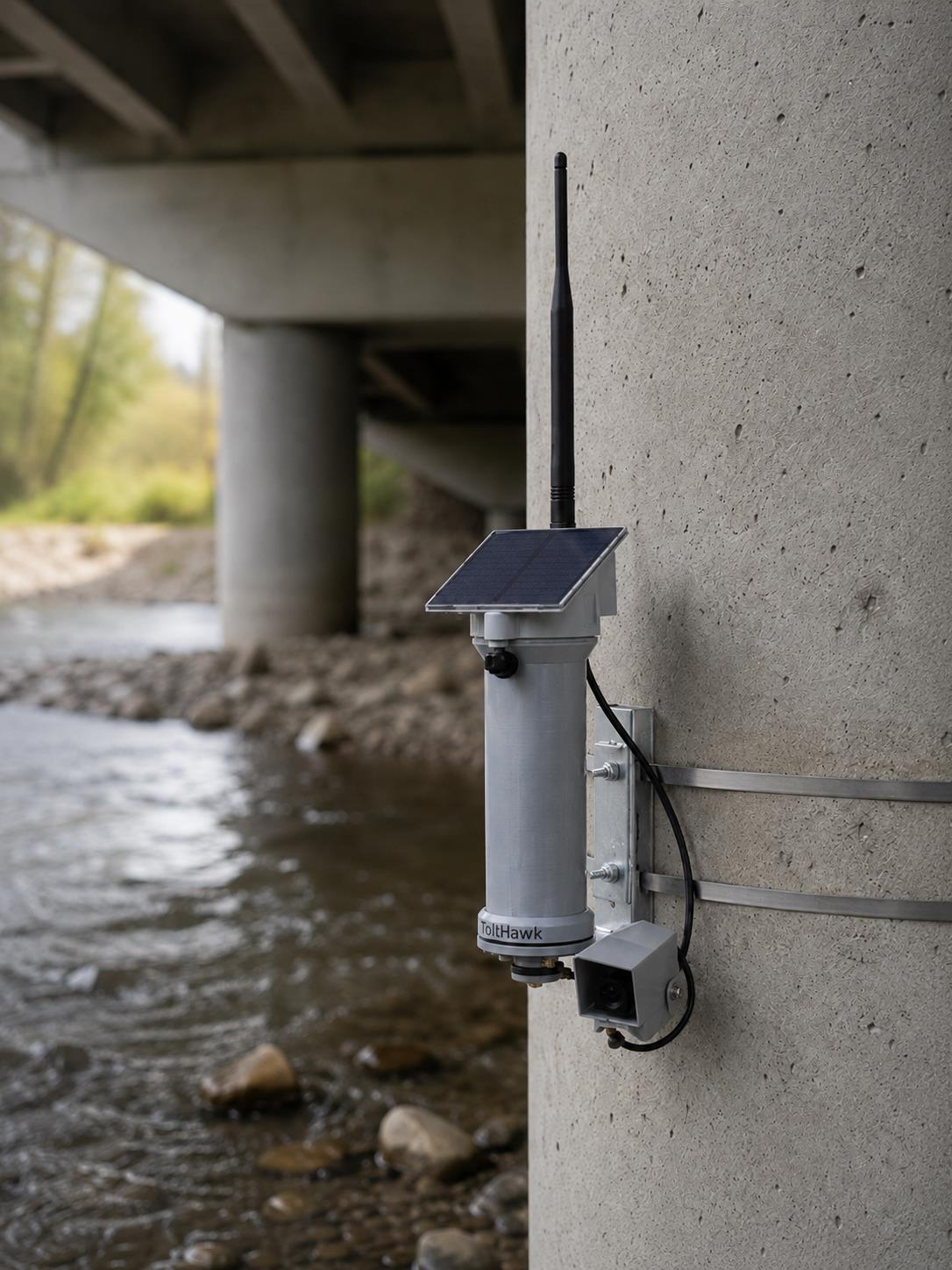
A self-contained monitoring system built to deliver water-level data with less routine maintenance and straightforward installation.
ToltHawk combines radar-based level measurement and wireless communication in one self-contained unit. Monitor changing water levels without having to visit each site to collect readings manually.
Solar-charged battery power supports extended operation. Configurable communications, alerts, and API access help get useful information to the people and systems that need it.
The essential tools for collecting, sharing, and acting on water-level data from sites that are difficult to monitor manually.
Choose cellular, satellite, or LoRaWAN based on your deployment. US cellular units can auto-switch between AT&T, Verizon, and T-Mobile, with international coverage in 150+ countries.
Designed for 5–10 years of field operation without routine maintenance. Solar-charged battery power supports operation for many months without sunlight.
Self-contained units typically mount over bridges or on cantilevers. No wiring or calibration is required after installation.
Set threshold levels for individual locations and receive phone, text, and email notifications when readings reach the levels you configure.
Integrate sensor readings into your own software, websites, and dashboards using the available REST API.
Bring together sensor information with NOAA weather and precipitation data, in-basin USGS gauges, and LiDAR contour data.
A practical overview of measurement performance, power, service life, and connectivity.
Select the communication method that matches your site's coverage, infrastructure, and monitoring requirements.
For sites with cellular service. US units can auto-switch across AT&T, Verizon, and T-Mobile, with international coverage available in 150+ countries.
For remote deployments without cellular coverage. Satellite-enabled configurations can send data from locations beyond conventional mobile networks.
For sites without cellular coverage that are within range of a LoRaWAN gateway. A suitable gateway and network setup are required.
Add capabilities to suit the conditions, equipment, and response requirements at your site.
Capture pictures and videos of the target area. Cellular configurations support live media transmission; satellite configurations record onsite for later retrieval.
Connect compatible additional sensors for measurements such as temperature, precipitation, conductivity, turbidity, and more.
Support below-grade or submerged measurement applications alongside the standard radar unit.
Trigger compatible field devices, including flashing road signals and sirens, when configured alert thresholds are crossed.
Have a question about installation, measurement intervals, data access, or selecting the right configuration?
Talk to ToltHawk →Tell us about your site, measurement range, and connectivity needs. We can help you discuss the right ToltHawk configuration for your monitoring requirements.